How Presto Uses Movement to Make Music Reading Easier


Children learn by doing. They build, hop, dance, explore, and use their whole bodies to understand new ideas.
Music can be learned the same way.
For a child, looking at lines, spaces, and notes on a page can feel very abstract. Before those symbols make sense, children need to understand what the music sounds and feels like.
That is why sound before sight is an important part of music learning. Children first hear, sing, play, and experience musical concepts before connecting them to music notation.
In Presto, this approach helps children ages 7–12 develop stronger connections between what they hear, what they play, and what they see on the page.
Experiencing High, Low, Steps, and Leaps
Musical direction can be easier to understand when children can experience it physically.
For example, children might:
Reach up when a melody moves higher
Crouch down when it moves lower
Take a step when the melody moves to the next note
Make a larger movement for a skip or leap
These activities give children a concrete way to understand musical patterns. Later, when they encounter those patterns in music notation, they have a familiar musical experience to connect them to.
Walking the Giant Floor Staff
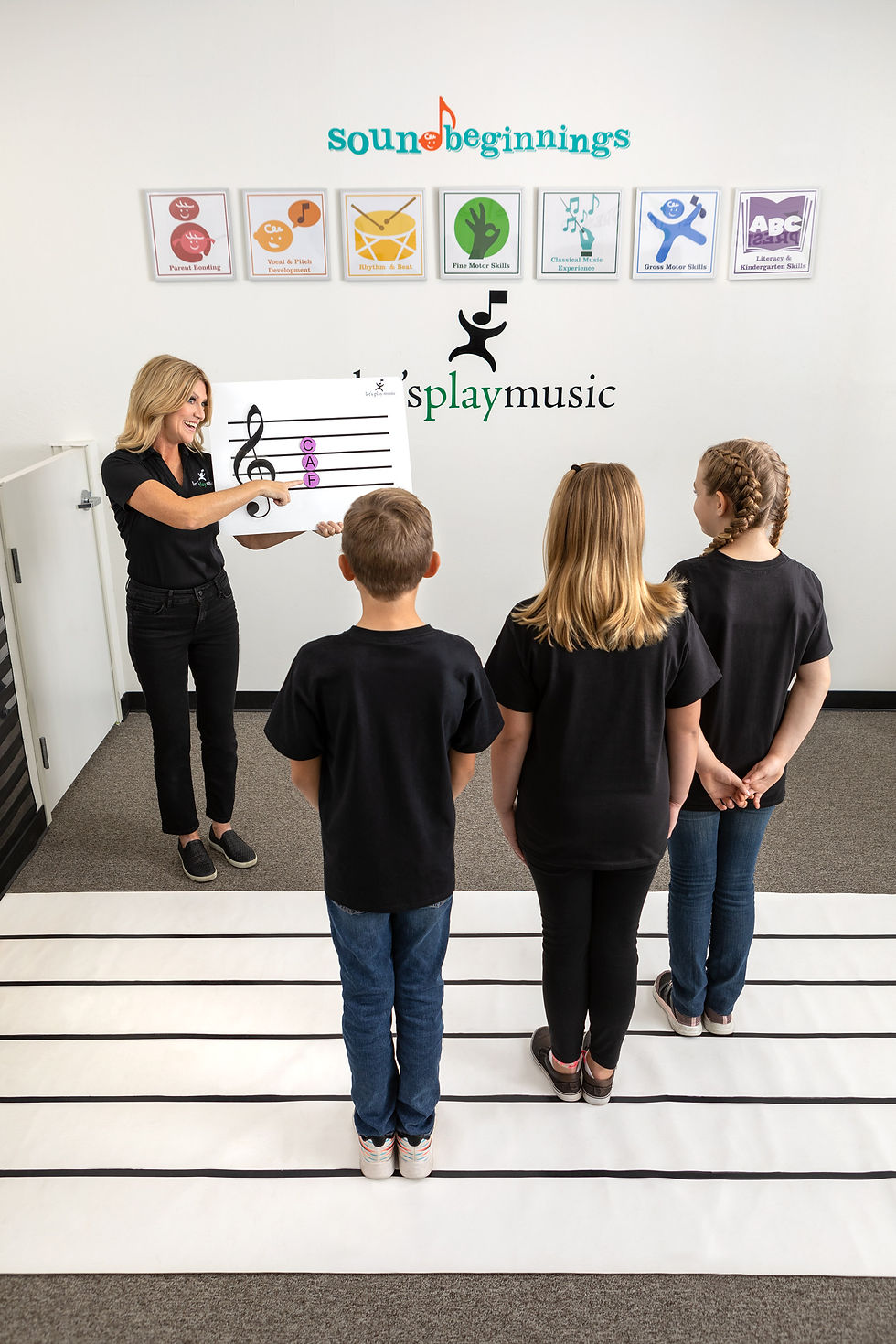
A giant floor staff takes music notation off the page and puts it into a space children can explore.
Children can physically move between lines and spaces while learning concepts such as:
Lines and spaces
Steps and skips
Melodic direction
Note relationships
Instead of only memorizing where notes appear on a staff, children begin to understand how those notes relate to one another.
That understanding becomes especially useful as they begin reading more music independently.
Sound Before Sight
Think about how children learn to speak. They hear language long before they learn to read it.
A child might first hear a musical pattern, then sing or move with it, find it on the piano, and eventually recognize it in notation.
This gives the symbols on the page meaning. The child is not simply memorizing what a note looks like. They are connecting it to a sound and musical idea they already know.
Why This Matters as Kids Get Older
As children progress into more advanced music, they encounter increasingly complex rhythms, melodies, patterns, and notation.
Having a strong foundation helps them make sense of those new ideas instead of treating music reading as a collection of rules to memorize.
Presto builds on that foundation while giving older children opportunities to develop their piano skills, musicianship, creativity, and confidence.
What Parents May Notice
A strong understanding of musical concepts can show up in many ways at home. You may notice your child:
Recognizing musical patterns more quickly
Understanding steps, skips, and leaps
Connecting what they hear to what they see
Reading music with greater confidence
Applying music concepts while playing
Becoming more independent at the piano
Music reading becomes more meaningful when children understand what they are seeing rather than simply memorizing notes.
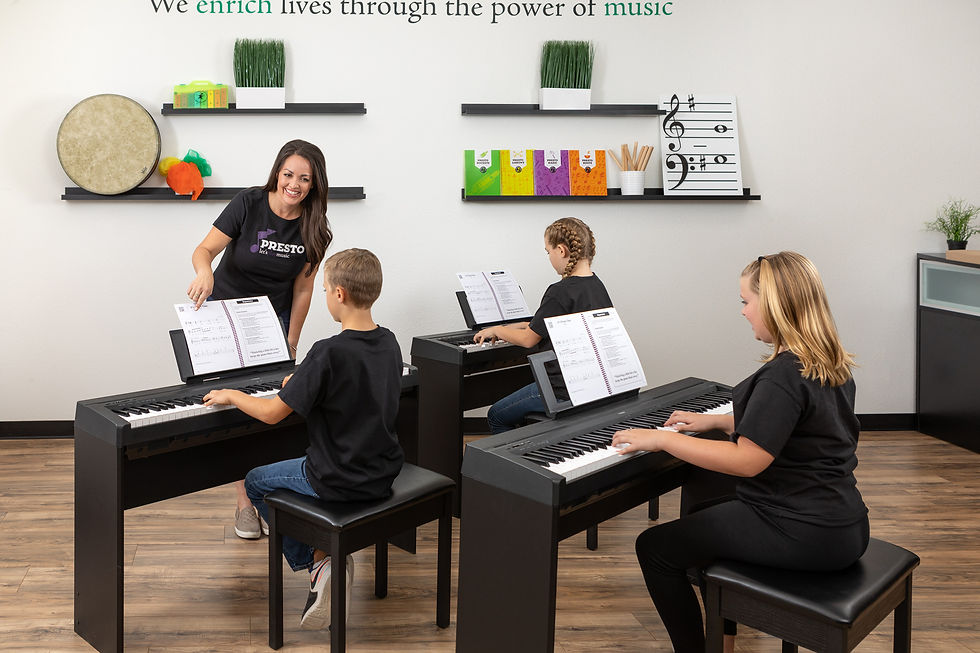
Building Confident Music Readers
Learning to read music does not have to begin with a page full of symbols.
It can begin with listening, singing, playing, and experiencing music.
When children can connect what they hear, what they play, and what they see, music reading becomes a natural part of becoming a confident musician.
Ready to Keep Your Child Growing as a Musician?
Whether your child is continuing from Let’s Play Music or starting music for the first time, Presto gives children an engaging way to develop their piano and musicianship skills.


Comments