How much should my child practice at home?


"How much should my child practice at home?"
If you have found yourself asking this question, you are certainly not alone—it is the single most common question we hear from parents.
While the exact answer depends on your child's age, the goal is never to add extra schoolwork to a busy family schedule. Instead, home activities are just simple, bite-sized ways to help children remember what they learned in class and build their confidence.
Here is a quick look at what music at home looks like for each stage, and how you can easily support your child along the way.
Sound Beginnings (Ages 0–4)
In Sound Beginnings, our "Home-Fun Activities" are completely optional and meant to be fun and enriching time spent with you and your child.
You might sing songs together, play a music game, color a class activity, or cut out a few puppets to use at home.
But if there's one thing we hope every Sound Beginnings family does, it's listen to the class music.
The more children hear the songs, the more familiar they become. Before long, they're singing along, joining in during class, and recognizing musical patterns without even realizing they're learning.
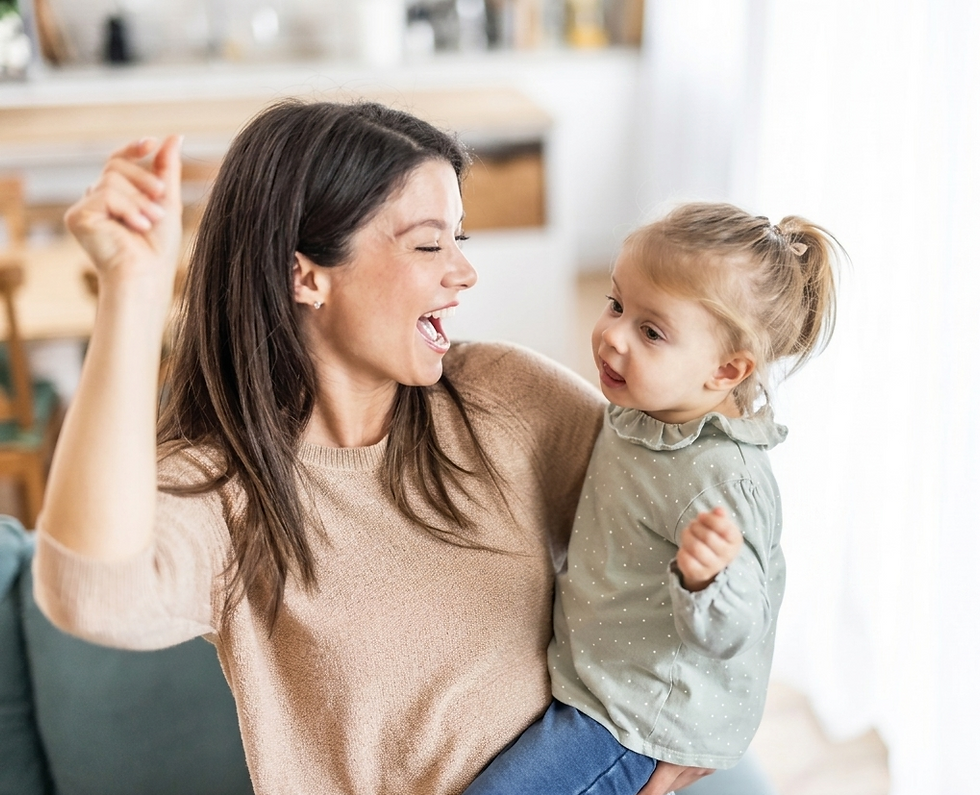
Sometimes the best music lesson happens during a car ride or while dancing around the living room!
Let's Play Music (Ages 4–6)
As children get older, they're ready for a little more responsibility.
1st Year
Each week, students will:
Listen to the class album.
Complete one bell practice.
Finish one short written activity with a parent's help.
These activities are designed to reinforce what they learned in class, get in the habit of daily music practice, and creating magical, musical moments at home. This should take 5-7 minutes about 3-5 times per week.
2nd and 3rd Year
As piano becomes part of the program, students will:
Listen to the class music.
Complete five short piano practices each week.
Finish one written assignment.
Notice we said short piano practices. For 2nd Year, we recommend just 5-7 minutes at the beginning, and building up to 10-13 minutes by the end of the year. For 3rd Year, they should start out at 12-15 minutes per practice session and build up to 15-20 by the time they graduate from Let's Play Music.
Children learn best through consistency. A few minutes each day is much more effective than trying to fit everything into one long practice session. And most kids hate long practice sessions.
Parents don't need to be music experts—they simply help create a routine, offer encouragement, and celebrate their child's progress.
Presto (Ages 7–12)
By the time students reach Presto, they're becoming more independent musicians.
Students practice piano five days per week, following the assignments in their Student Workbook.
Their Workbooks are carefully designed to be easy to follow, but they will likely need a little guidance and encouragement from you. Depending up their age, we recommend that Presto students spend about 20-30 minutes practicing each day.
Some children may still need reminders or a little help getting started, while others are ready to practice on their own. Every child is different, and that's okay!
The goal is to build a consistent habit that helps students continue growing in their piano skills.

Small Moments Make a Big Difference
Music practice isn't about adding more to your family's busy schedule.
It's about giving children regular opportunities to enjoy and refresh what they've learned while it's still fresh in their minds.
Those few minutes of listening, singing, or practicing each day add up over time. They help children build confidence, strengthen new skills, and experience the excitement of mastering something they couldn't do before.
And the best part? Many of those moments happen together.
Whether you're listening to the class album in the car, cheering after a piano practice, or singing your child's favorite class song before bedtime, you're helping your child build a lifelong love of music.
References
Hallam, S. (2010). The power of music: Its impact on the intellectual, social and personal development of children and young people. International Journal of Music Education, 28(3), 269–289.
Jørgensen, H. (2004). Strategies for individual practice. In A. Williamon (Ed.), Musical Excellence: Strategies and Techniques to Enhance Performance. Oxford University Press.


I like the focus on consistency rather than long practice FNF sessions. A few enjoyable minutes each day seems much more realistic for kids and parents.