Why Learning Chords Early Helps Children Succeed in Music Education

Updated: Jul 29
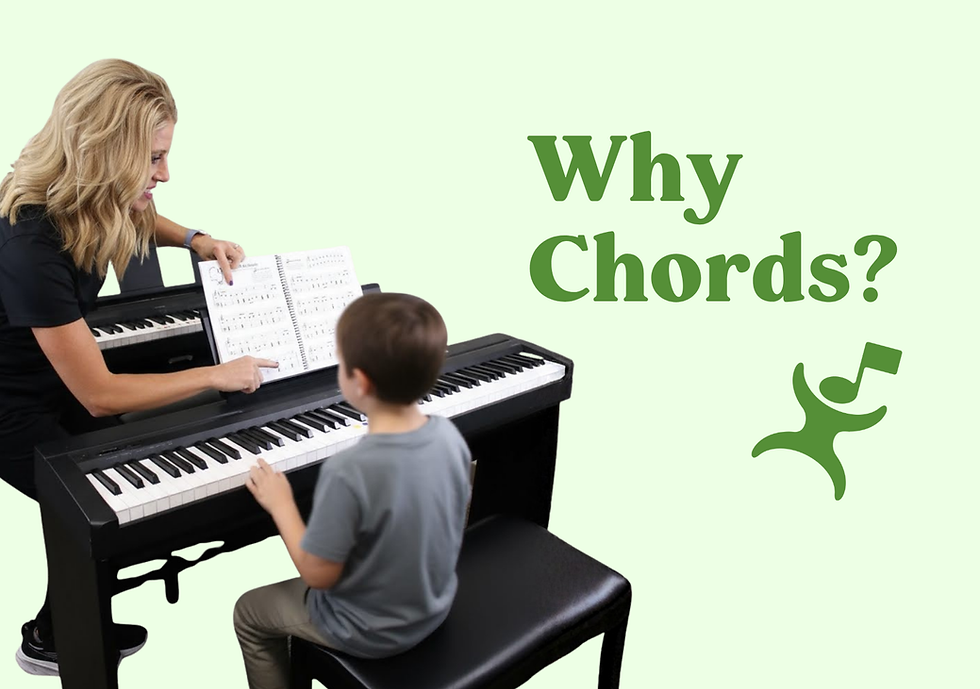
If you've ever watched a beginner piano lesson, you've probably seen a child carefully playing one note at a time: C... D... E...
Learning individual notes is an important skill, but our 2nd Year Let’s Play Music students take a different approach. Instead of focusing only on single notes, they begin learning chords—groups of notes played together to create beautiful, full harmony.
Many parents wonder, "Why teach chords so early?"
The answer is simple: chords help children make music, understand music, and enjoy music from the very beginning.
Why Does Let's Play Music Teach Chords First?
At Let's Play Music, our approach to teaching chords is unique because it closely matches the way children naturally learn.
Chords are the building blocks of music, and the three primary chords, (the I, the IV and the V) are the most commonly used chords in Western music. Folk songs, classical pieces, hymns, and even popular songs are built around these three chords. In fact, they make up about 90% of all music!
Rather than asking children to memorize individual notes, we first help them understand how music fits together. Learning the primary chords gives children a strong musical foundation that supports everything they will learn later.
Chords Help Children Make Real Music Right Away
One of the best things about learning chords is that they sound like real music immediately.
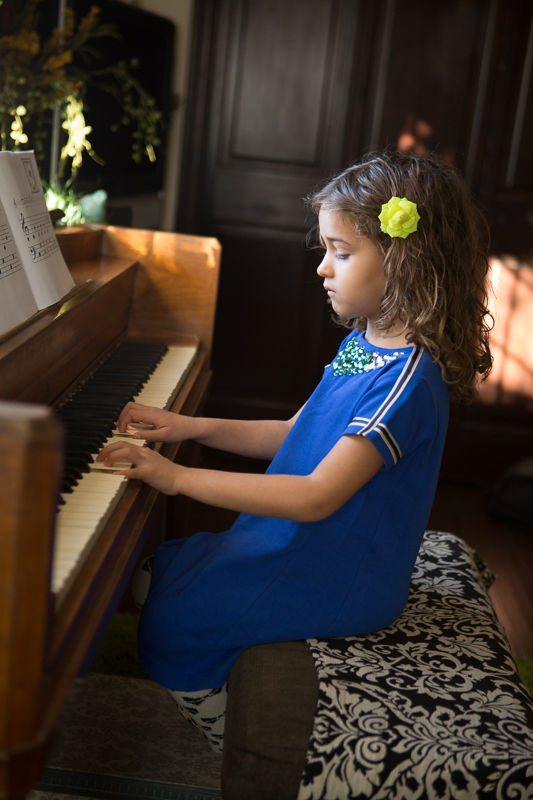
One of the guiding principles of the Let's Play Music curriculum is "Provide satisfying musical experiences". A beginning pianist can have a full, harmonious musical experience as they play chords and sing the melody.
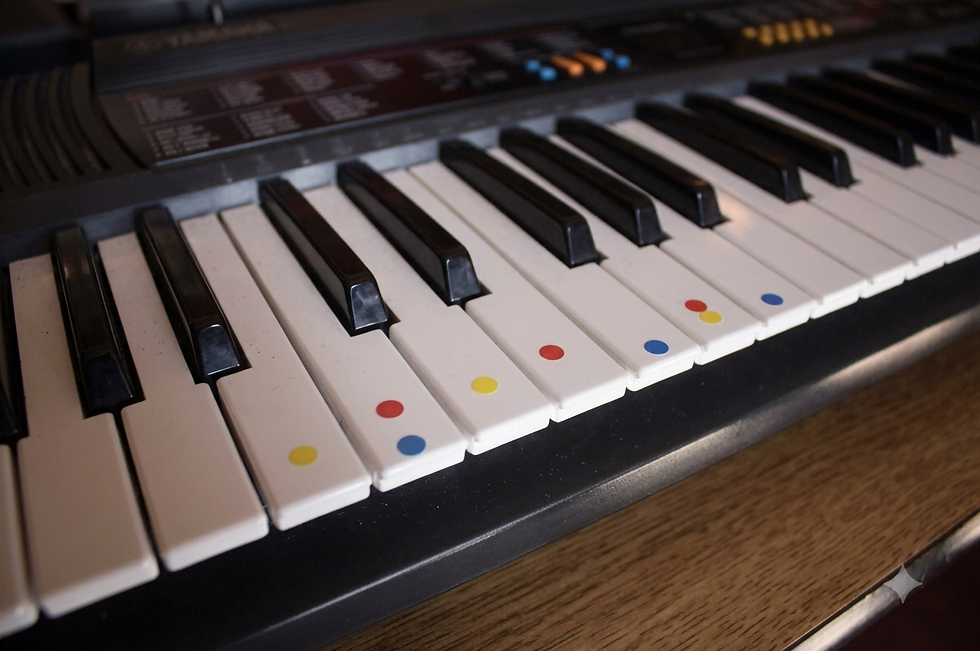
We call the primary chords Red, Yellow, and Blue Chords. So, in an age-appropriate way, they learn the basics of harmony. From the very beginning, they experience the joy of making music instead of simply practicing isolated notes.
That early success builds confidence and makes practicing much more enjoyable and rewarding on a musical level.
Chords Develop the Complete Musician
Our goal isn't simply to teach children how to play piano. We want children to become complete musicians who
can listen, sing, accompany themselves, recognize patterns, and understand how music works.
As students play chords, they also sing along. This sing-and-play approach strengthens multiple musical skills at the same time, including:
Listening
Singing in tune
Rhythm
Hand coordination
Musical independence
Instead of learning these skills separately, children naturally develop them together through meaningful musical experiences.
Chords Help Children Learn Through Listening

At Let's Play Music, we teach 'sound to sight' which means that our students first experience the sounds, through singing, games, and repetition, then see the notation. This way, the notes on the page already carry aural meaning and understanding for the students before they see them.
As children repeatedly hear and play their primary chords, they begin recognizing each chord by sound alone. They start hearing how songs move from one chord to another and visually noticing familiar patterns in the music they love.
These listening skills make it easier to learn new songs, understand harmony, and become confident musicians.
Chords Help Children See Patterns Instead of Memorizing Notes
Music is full of patterns.
Instead of memorizing every note in every song, children begin recognizing that many songs use the same chord progressions in different ways.
This pattern-based learning helps students play more confidently and prepares them for more advanced musical concepts in the future, including inversions, accompaniment styles, and improvisation.
Singing and Playing Together Builds Confidence
One of the most exciting milestones in 2nd Year Let's Play Music is when children begin accompanying themselves on the piano while they sing.

The chords provide the musical foundation while their voice carries the melody. This helps children connect what they hear, what they sing, and what they play into one complete musical experience.
Rather than simply copying notes on a page, they're actively creating music.
Building a Foundation for Lifelong Music Learning
The goal of Let's Play Music isn't simply to teach children how to play songs. We want them to become musicians who can listen, understand, create, and enjoy music throughout their lives.
Those colorful Red, Yellow, and Blue Chords may seem simple, but they help children:
Build confidence through early musical success.
Develop strong listening skills.
Recognize patterns that appear throughout music.
Sing and accompany themselves.
Create beautiful music from the very beginning.
That's the power of learning chords. By giving children a strong musical foundation first, Let's Play Music helps them grow into confident, creative, lifelong musicians.
Click the button below to learn more about our programs.



Learning simple chords early gives kids such a huge confidence boost. It’s also wonderful for adaptive music lessons, allowing children using various categories of wheelchairs to engage with instruments comfortably and play real songs right away.
I often check the blog when I want reliable information presented clearly. This article provided exactly that kind of experience. The author stayed focused on the most relevant aspects. I liked the practical examples and careful conclusions. The final paragraph highlighted the central lesson effectively. This post is worth saving.
The educational content on this page helped clarify several points that had previously seemed confusing. The author used simple explanations without removing important details. I appreciated the logical progression of the article. The examples made the more difficult parts easier to understand. The conclusion offered a helpful recap. This was time well spent.
I really valued how this article left room for readers to form their own follow-up questions naturally. The author didn't try to cover everything, wisely leaving space to read more elsewhere later. That restraint is exactly what makes a piece feel like part of an ongoing discussion. Thanks for such a thoughtfully restrained and genuinely engaging piece.