Why Let's Play Music Teaches Tonal and Rhythm Patterns


When parents hear children singing Do, Re, Mi, identifying music as major or minor, or moving to macrobeats and microbeats, they may wonder why these skills are such an important part of Let’s Play Music.
The answer is simple: music is built on tonal and rhythm patterns.
At Let’s Play Music, we want children to do more than memorize note names or copy what their teacher plays. We want them to show how music works.
That begins with learning to hear and recognize its patterns.
Learning to Hear Tonal Patterns
In Let’s Play Music, children learn to hear music in relation to Do.
Do is the tonal center—the musical “home” that helps the other notes make sense. Instead of hearing each note as a separate sound, children begin to understand how notes relate to one another.
As they sing and listen to tonal patterns, they learn that some notes feel more settled while others create a feeling of movement.
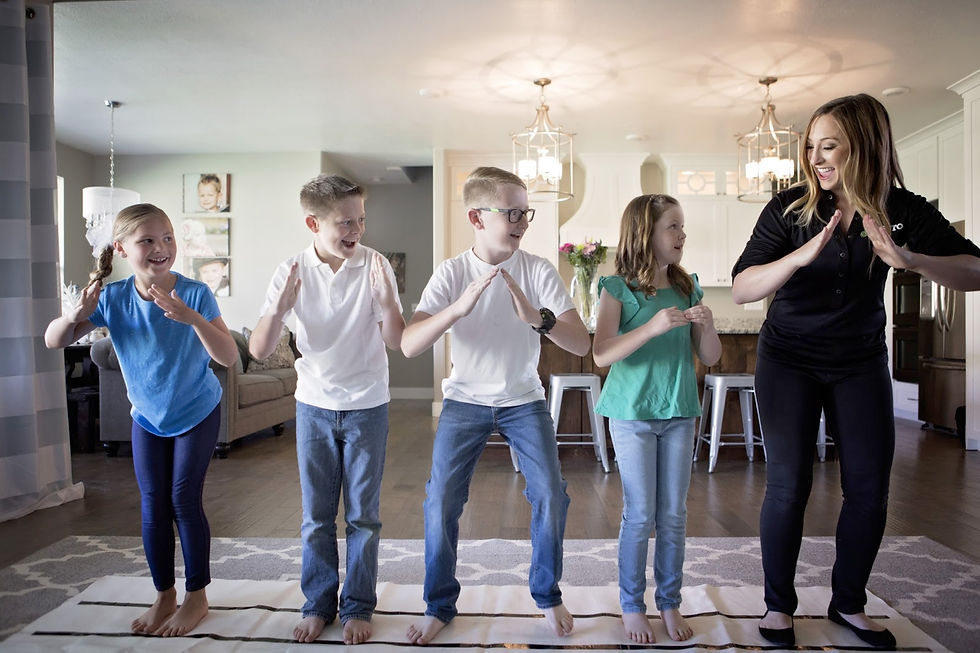
They also learn to hear the difference between major and minor tonalities.
A major pattern may sound happy or bright, while a minor pattern may sound sad or scary. Students learn to recognize these differences through their ears and voices.
Later, they learn more specifically what creates those differences. In a minor tonality, the third, sixth, and seventh scale steps are lowered. The familiar Mi, La, and Ti become Me, Le, and Te.
This gives students a much deeper understanding of tonality than simply memorizing a major or minor scale.
Learning to Feel Rhythm Patterns
Rhythm patterns help children understand how music moves through time.
In Let’s Play Music, students experience the macrobeat as the larger, steady beat that keeps the music moving. They also learn to recognize the microbeats, which divide the larger beat into smaller equal parts.
They begin to feel how music can move in groups of two or three and how these patterns create different kinds of meter.
Over time, students learn that rhythm isn't simply about counting.
It's about understanding how the beat is organized.
This helps them recognize the difference between the steady pulse, the smaller divisions within that pulse, and the rhythmic patterns that are created from them.
Why We Teach Both
Tonal patterns and rhythm patterns give children two important ways to understand music.
Tonal patterns help them understand how music sounds.
They learn to recognize tonal centers, hear the difference between major and minor, and understand how notes work together.
Rhythm patterns help them understand how music moves.
They learn to recognize a steady pulse, hear divisions of the beat, and understand how rhythm is organized through meter.
Together, these skills help students begin to understand the structure behind the music they sing and play.

Patterns Become the Building Blocks for What Comes Next
The goal isn't simply for students to recognize a tonal or rhythm pattern during class.
These patterns become part of the musical knowledge they continue using throughout Let’s Play Music.
The ability to hear tonal relationships supports understanding of melody, chords, harmony, and key signatures.
The ability to understand rhythmic patterns supports rhythm reading, meter, piano playing, and composition.
By the time students begin making more advanced musical decisions, they already have experience hearing and understanding many of the patterns they are working with.
More Than Memorizing Music
At Let’s Play Music, we want students to become musicians who can think about music, not simply follow instructions.
That means understanding the patterns behind what they hear and play.
When children can recognize a tonal pattern, feel a macrobeat, hear the difference between major and minor, or understand how a beat divides, they're building the musical knowledge they will continue using throughout their journey.
Tonal and rhythm patterns aren't just activities we do in class. They're part of the foundation that helps everything else in music make sense.
Discover the Let’s Play Music Difference
From singing Do, Re, Mi to identifying major and minor, feeling macrobeats and microbeats, and eventually applying those skills to piano playing and composition, Let’s Play Music helps children build a strong understanding of how music works.
Find a Let’s Play Music class near you and discover how your child can learn to hear, understand, and create music.


Comments