Why Movement Is Part of Our Classes


If you've ever watched a Let's Play Music class, you may have wondered, "Why are the kids marching, dancing, clapping, and playing games? When do they actually get to the piano?"
It's a great question! While it might look like they're simply having fun, every movement activity has a purpose. In fact, movement is one of the most important ways young children learn music.
At Let's Play Music, we believe children learn best when they experience music with their whole body. Before they can confidently play rhythms on the piano or recognize musical patterns on a page, they first need to hear, feel, sing, and move to the music. That's why movement is woven into every stage of our curriculum.
Children Learn Music the Same Way They Learn Language
Think about how children learn to talk. Long before they can read a book, they spend months listening, babbling, copying sounds, and interacting with the people around them.
Music develops in much the same way.
Before children can confidently read notes or play rhythms on the piano, they first need to experience music. Walking to a steady beat, clapping rhythm patterns, tracing high and low notes, and moving to match dynamics and articulation, help musical concepts become something they can truly understand.
This full body approach builds a strong musical foundation that supports and scaffolds everything they'll learn later.

For example, when children march to a steady beat, they're learning to feel a consistent pulse before they're ever asked to play one on the piano. When they use solfège hand signs, they're strengthening the listening, and musical thinking they'll later use to read music. When they move their bodies according to the mood of the music, they are learning to express themselves using music.
There's Real Learning Behind the Fun
To a child, movement activities feel like play. To a music teacher, every march, clap, dance, and game has a purpose.
As children move with the music, they're learning to:
Keep a steady beat
Feel rhythm patterns
Hear high vs. low notes
Coordinate movement with music
Express the feeling of the music with artistry
These foundational skills prepare children for much more than piano lessons. They help children become well-rounded musicians who understand the music they're making instead of simply copying what they see.
Why Movement Matters
We don't include movement in our classes just because it's fun—it plays an important role in how young children learn. Decades of music education research and neuroscience show that children understand musical concepts more deeply when they can hear, sing, and move before they're expected to read music or play an instrument.
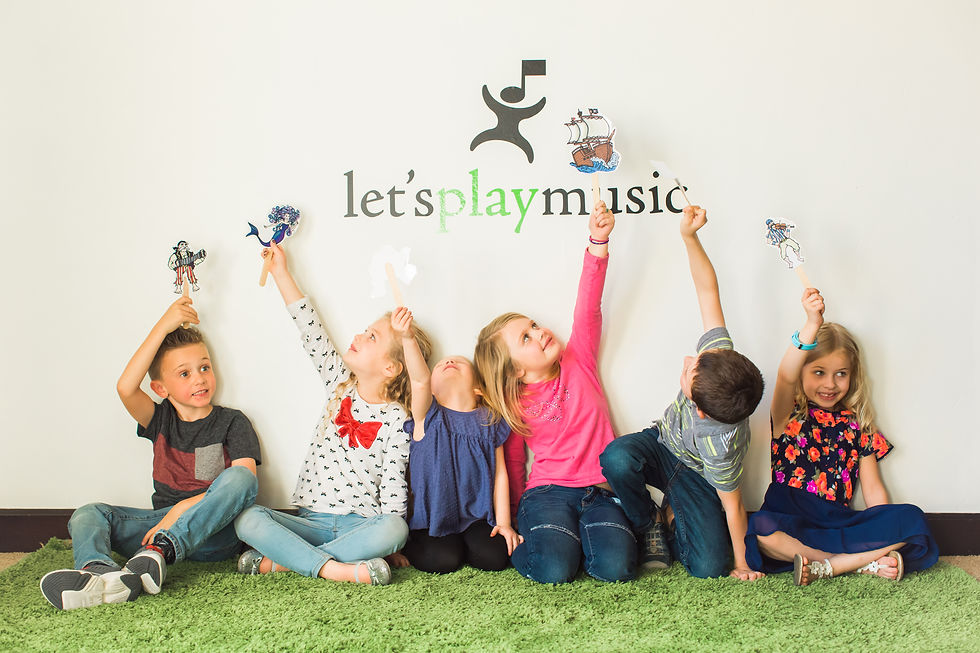
This idea isn't new. Music educators like Zoltán Kodály believed that singing and movement are a child's natural pathway into music. Edwin E. Gordon's Music Learning Theory also emphasizes that children develop musical understanding through listening, singing, and purposeful movement before reading notation.
These philosophies continue to influence music education around the world today.
Modern brain research also helps explain why movement is so effective. When children clap, march, dance, and cross the midline of their bodies during musical activities, they're strengthening connections between different areas of the brain. These experiences support coordination, attention, memory, and learning while helping children retain new musical concepts more effectively.
Rather than sitting still and memorizing information, children learn by actively experiencing music with their minds and bodies working together.
How Movement Grows With Your Child
Because movement is closely connected to children's musical and physical development, it naturally changes as they grow. Each stage of the Let's Play Music curriculum builds on the one before it.
Sound Beginnings (Babies, Toddlers, & Preschoolers)
In Sound Beginnings, movement is all about exploration, connection, and joyful discovery. Children and their caregivers sing together, enjoy nursery rhymes, play simple instruments, and participate in musical games.
Families bounce, sway, march, and enjoy Smart Moves, where children respond to beautiful classical music through whole-body movement. These shared experiences help develop steady beat, listening skills, coordination, and body awareness while strengthening the special bond between caregiver and child.
Let's Play Music (Pre-K through 1st Grade)
As children enter Let's Play Music, movement becomes even more intentional. Every activity is carefully designed to teach a specific musical concept while keeping learning playful and engaging.

Students might march to a steady beat, clap rhythm patterns, toss beanbags with the music, or use solfège hand signs while singing. They also explore Chord Maps, play the autoharp, and participate in interactive games that connect what they hear with what they see and feel.
These activities do more than teach music. They strengthen fine motor skills, eye-hand coordination, and the brain-body connections children need for successful piano playing. By experiencing rhythm, melody, and harmony through movement first, students gain a deeper understanding before they're expected to perform those same concepts independently at the piano.
Presto (Older Elementary)
Our older beginner students in Presto enjoy movement that is growing alongside their musical abilities.
As piano skills become more advanced, movement becomes more refined and purposeful. Students learn healthy posture, relaxed technique, expressive playing, and how natural body movement contributes to beautiful tone and musical expression.
Movement remains an important part of music-making, helping students connect what they hear, what they feel, and what they play.
Learning Through Joy

One of the things that makes Let's Play Music unique is that children don't just learn about music—they experience it.
Every song, game, dance, and movement activity has been thoughtfully designed to prepare children for the next step in their musical journey. What looks like simple play is actually laying the foundation for rhythm, listening, coordination, creativity, confidence, and lifelong musicianship.
So the next time you see your child marching, dancing, or clapping during class, remember that every activity has a purpose. Long before children can confidently read music or play the piano, they need to experience music with their whole body.
Those joyful moments are helping them build strong musical skills, confident minds, and a lifelong love of music.
References
Čoh, M. (2021). Motor and Intellectual Development in Children.
Ferguson, L. (2005). The Role of Movement in Elementary Music Education: A Literature Review. General Music Today, 23(2), 23–27.
Gordon, E. E. (2007). Learning Sequences in Music: A Contemporary Music Learning Theory. GIA Publications.
Kodály, Z. Selected writings and philosophy on music education.
Papazachariou-Christoforou, M. (2022). Movement Experiences in Preschool Music Classes. General Music Today, 36(1), 18–25.
Pedersen, & Young. (2010). Research on cross-body movement and cognitive development.
Rhett. (2020). Research on movement, engagement, and learning.


I found Dm win game login useful while practicing MATLAB problems, especially for understanding logic errors and improving my coding approach.
I tried doing a small withdrawal just to understand the process after using Dmwin game and it was completed on the same day through UPI. Just wanted to confirm if the timing is always similar for everyone or if it depends on the amount and verification.
I’m seeing Diuwin app Register mentioned in a few places, so I wanted to check it out. Before using it regularly, can anyone confirm if it works properly on Android devices and whether it requires any verification
Vry useful information for anyone trying the Diu win game login process for the first time. The instructions are easy to follow.